
Challenge
Water is the hardest utility to run in the Torres Strait. Torres Strait Island Regional Council supplies 15 outer island communities spread across roughly 42,000 km² of sea. Every network is standalone. There is no interconnection, no neighbouring supply to draw on, and no second chance if storage runs down before the wet.
That isolation changes what water loss and network leakage cost. On a mainland network, a buried water main leak costs the treatment and pumping energy behind it. On an island supplied by rainwater harvesting, bores and diesel-powered desalination, every litre lost has to be re-manufactured at some of the highest marginal costs in Australian water — and the diesel to do it arrives by barge.
Ultimately, the level of network leakage drives desalination runtime, which in turn drives fuel burn, and both land on Council’s operating budget.
Council’s Water and Wastewater team maintains all pipes up to and including the customer meter, but practical constraints are unforgiving. Crews and equipment fly or barge in. Weather windows are narrow. Accommodation is limited. Any survey has to be complete, accurate and finished inside the mobilisation window.
Structure and Professional Water Loss Solution
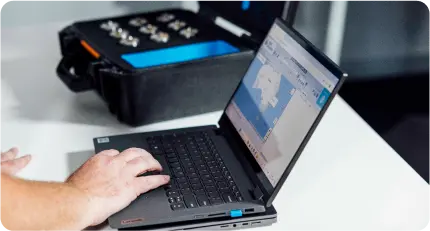
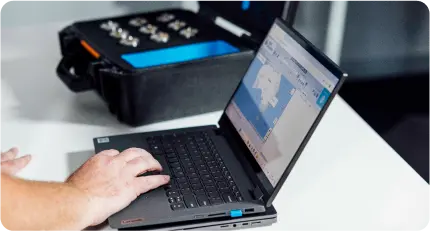
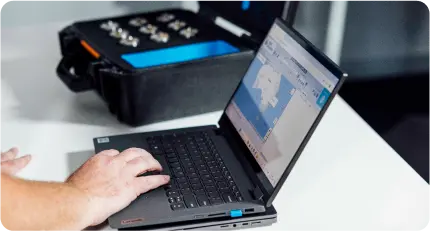
TSIRC commissioned Aqua Analytics to lead a leak detection programme across 12 island communities. Aqua’s team worked alongside four TSIRC staff members to deliver the works, which served as a knowledge-transfer and training opportunity, given their recent purchase of Gutermann acoustic leak-detection equipment.
- A Joint Team: The team was built as one unit: Aqua technicians providing detection method and Council operators providing network knowledge and community access. On remote work, that combination finds more than either does alone.
- Planned around the logistics, not despite them: Community sequencing, equipment staging and consumables were set before mobilisation so each network could be surveyed end to end in a single visit, worked around flight and barge schedules and the weather.
- Full acoustic survey of the reticulation: Technicians sounded and correlated across each community's network using ground microphones and leak-noise correlators, covering the accessible network rather than sampling it.
- Find and fix in the same trip: Rather than surveying and leaving a report behind, the team repaired leaks as they went. Confirmed finds were pinpointed, marked and handed to Council crews on the spot.
- Capability left behind: Working shoulder to shoulder with Council's local water staff transferred sounding and correlation technique to the people who are there year-round. That's the Human Layer — skilled people on the ground, not equipment left in a shed.
Results
- 94 network leaks located across 12 island communities.
- 583 L/min of running loss identified on the water network.
- More than 564 million litres a year of water loss identified when network and customer side leaks are considered.
- A substantial share repaired in-trip, with the balance handed to Council: local water staff completing the remaining network repairs and TSIRC Building Services taking the residential leaks.
- Complete coverage of 12 communities in the programme window, with no return mobilisation required.
Emma Evans, TSIRC’s Manager of Water and Environment, noted that the team worked to repair as many leaks as possible during the programme, with Council’s own water staff and Building Services teams picking up the remaining network and residential repairs respectively.
Conclusion
Remote island networks are where water loss hurts most and where it is hardest to find. Distance, weather and freight turn every kilometre of unsurveyed main into a standing risk to supply.
Across 12 Torres Strait communities, a joint Aqua Analytics and TSIRC crew located 94 network-side leaks and identified more than 564 million litres of annual leakage — recovering capacity, easing pressure on desalination, and leaving Council’s own operators better equipped than before.
Aqua Analytics delivers active leak detection and non-revenue water programmes across regional and remote Australia and New Zealand, from our North Queensland base in Cairns.
If your network is isolated, expensive to supply, or hard to reach, talk to our team about a programme built for those conditions.