
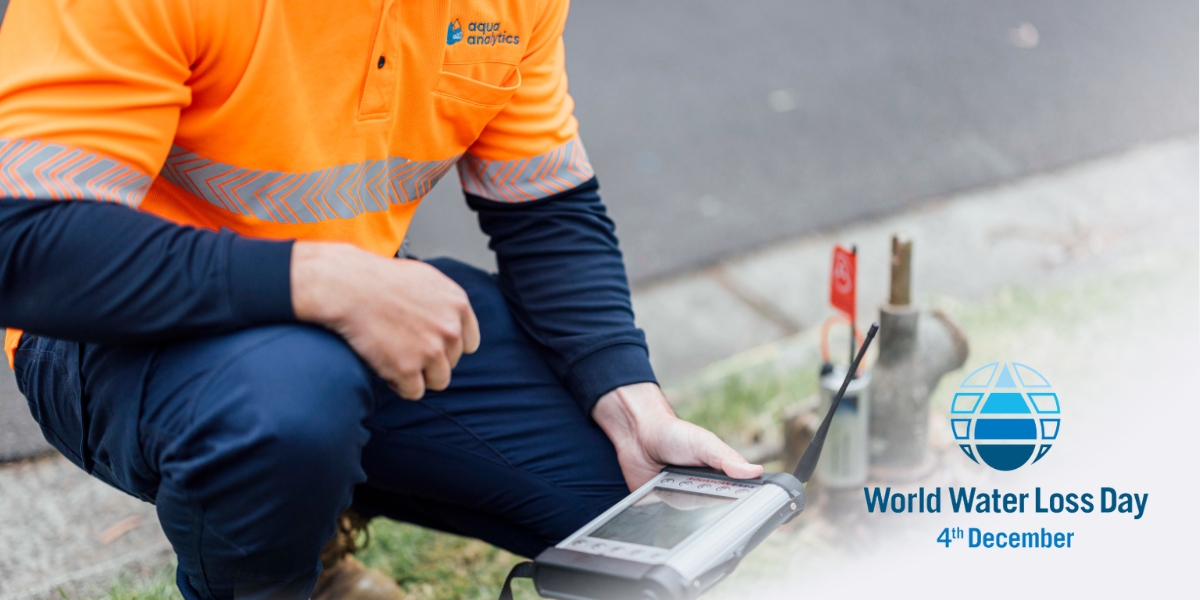
World Water Loss Day on 4 December 2025 highlights the critical global challenge of water loss in supply networks.
Created to raise awareness and promote meaningful action, the day underscores the scale of inefficiencies that lead to billions of litres of treated drinking water being wasted every day through leakage, unauthorised consumption, and unmetered use.
It also provides an essential platform for sharing emerging technologies, proven methodologies, and collaborative approaches that support more sustainable water management.
By improving network performance and reducing losses, utilities can strengthen service reliability, increase operational efficiency, and better protect scarce water resources.
At Aqua Analytics, we are proud to contribute to these efforts across Austraia and New Zealand. Our team delivers advanced water network solutions that help utilities identify inefficiencies, target leakage, and optimise long-term performance, thereby supporting a more resilient and sustainable future for communities across the region.
Why World Water Loss Day Matters
Water loss is a critical global issue, with far-reaching consequences for resources, communities, and the environment. According to a study by Liemberger and Wyatt (2019), the global volume of non-revenue water (NRW) — water lost through leaks, theft, or unmetered use — is estimated at 346 million cubic metres per day.
Essentially, for every 10 litres of water sent into the network, about 3 litres are wasted and never used. The economic cost of this lost water amounts to USD $39 billion annually.
The implications of this are significant. If just one-third of global NRW were saved, it would provide enough water to meet the daily needs of 800 million people. This highlights the immense potential for improvement in water supply systems.
Beyond economic losses, water wastage exacerbates challenges in regions already grappling with water scarcity. The growing emphasis on the connection between water loss and carbon emissions reflects heightened awareness and increased funding for water projects. World Water Loss Day shines a spotlight on all these issues, urging collective action to reduce waste and ensure sustainable access to water for all.
Get involved in World Water Loss Day by using #WorldWaterLossDay in your social media posts, or by posting on the IWA Water Loss Specialist Group LinkedIn Page.
Why Collective Action is the Best Way to Combat Water Loss
Addressing water loss requires collective action from governments, utilities, communities and the private sector. Collaboration strengthens efforts, enabling more comprehensive and sustainable solutions to this global challenge. Here’s how collaborative action is the best way to combat water loss:
- Government and Utility Partnerships: Governments play a crucial role in funding and supporting water loss reduction initiatives, while utilities bring operational expertise to implement these programs effectively. Together, they can drive meaningful change.
- Community Engagement: Public awareness campaigns educate communities about water conservation and the importance of reporting visible leaks or inefficiencies. An informed public can significantly aid in reducing water loss.
- Industry Collaboration: Partnerships between water network management companies and utilities ensure access to advanced technology and innovative solutions tailored to specific network challenges.
By combining the efforts of all stakeholders, we help create unified strategies that not only reduce water loss but also secure sustainable water supplies for future generations.
Practical Steps to Reduce Water Loss in Your Network
Reducing water loss is essential for protecting resources and ensuring efficient water supply. Here are some proven strategies that utilities and organisations can implement:
- District Metered Areas: Sectorising water supply systems through the implementation of DMA enables effective monitoring, awareness, and reduction of water leakage in distribution networks.
- Active Leak Detection: Regularly monitoring pipelines using advanced tools, such as acoustic sensors and AI-driven software, can help identify and fix leaks before they escalate into major issues.
- Pipeline Condition Assessments: Evaluating the condition of pipes can pinpoint areas at risk of failure, allowing for targeted maintenance and preventing water loss.
- Smart Water Metering and Monitoring Systems: Installing smart meters enables real-time tracking of water usage and helps identify discrepancies that indicate leaks or unauthorised consumption.
At Aqua Analytics, we specialise in water loss reduction and offer comprehensive NRW consulting services. Our team collaborates closely with clients to design effective strategies, leveraging cutting-edge technology and expert insights. By prioritising efficiency and precision, we help utilities minimise non-revenue water, lower operational costs, and promote sustainability.
It’s Time to Take Action to Secure Our Water Future
World Water Loss Day is a timely reminder of the ongoing challenges posed by water loss and the need for coordinated action across the sector.
With close to one-third of treated drinking water lost globally through leakage and inefficiencies, the imperative for smarter approaches, genuine collaboration, and informed public engagement has never been greater.
Progress is achievable. By embracing advanced monitoring technologies, strengthening partnerships between utilities and industry, and supporting community awareness, meaningful reductions in water loss can be realised. These efforts not only drive more efficient use of valuable water resources but also safeguard the environment and improve the resilience of future water supplies.
This World Water Loss Day, we encourage all stakeholders — from utility practitioners and policymakers to local community members — to play an active role in supporting better water network performance. Every contribution, no matter how small, helps shape a more sustainable and secure water future.
To understand how Aqua Analytics can assist with reducing losses and improving the performance of your water network, we welcome you to get in touch.
Together, we can strengthen the reliability of our water systems and deliver lasting benefits for generations to come.