
Acoustic Leak Detection That Supports Measurable Water Loss Reduction
REDUCING UNCERTAINTY SO TEAMS KNOW WHERE ACTION IS JUSTIFIED
If you’re a water utility or council struggling to confidently confirm the leak location, we provide validated acoustic leak detection specifically for live water networks. We survey defined areas such as DMAs, confirm findings in the field, and deliver clear results directly from the site so teams can make informed decisions without delay. Our approach is designed to confirm where action is justified, not simply identify possible leak signals. The outcome is earlier confirmation, fewer unnecessary works, and clear actions that support both operational response and long-term water loss reduction.
The Leaders in Water Network Acoustic Leak Detection
- We are global experts in the water loss and leakage reduction industry and are trusted by some of the region’s most respected water utilities
- We've delivered and continue to deliver ongoing multi-year active leak detection programs delivered for utilities and councils
- We can identify buried leaks in water supply networks that don’t present themselves during routine water utility inspections
- Leak detection results are delivered the same day from the site, allowing faster operational decisions and crew deployment to reduce water loss
- We recommend clear prioritisation of where to act and where not to, reducing dig-and-miss scenarios and repeat works
- We report network defects via field tablets for real-time operational awareness, which leads to faster network improvements.
- We understand the tech stack of water utilities and can incorporate data seamlessly into their EAM tools via APIs
Our team also offers real-time leak detection and trunk main leak detection services. To find out more, get in touch today.
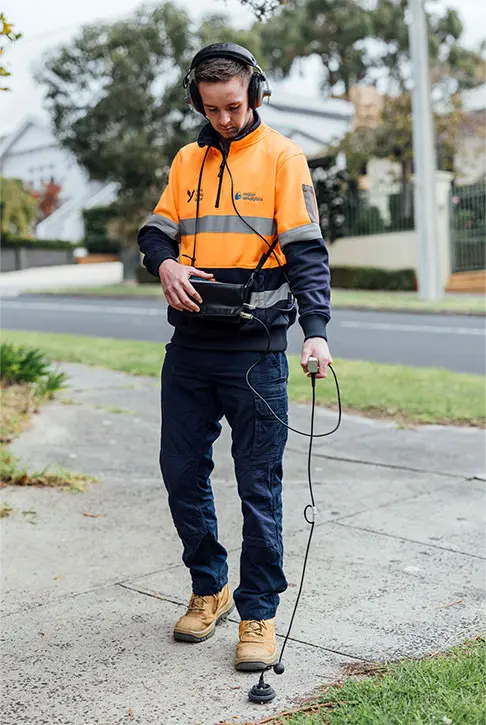
In response to drought and water stress, the NSW government launched the $35.3 million Water Efficiency and Regional Leakage Reduction Program to address leakage across regional utilities. Aqua Analytics, selected for its expertise in water loss management, has played a key role in this critical program, which spanned four years and involved collaboration with the NSW Department of Climate Change, Energy, the Environment and Water (DCCEEW) and local councils.
Key results include:
- Identification & repair of over 3,750 leaks
- 7.8 billion litres of water saved annually
- Improved overall network performance and reduced operational costs
Aqua Analytics demonstrated its commitment to water conservation by contributing to substantial water savings, supporting nearly 50 councils, and reinforcing sustainable water management practices across NSW.

Our Acoustic Leak Detection Services Are Designed for Water Utilities & Counsels
Everything you need to act with confidence, from field work through to reporting

Professional Delivery On Site
You receive a fast, prompt, and professional service delivered by experienced water network technicians who understand live water supply systems. Our teams work safely within active assets and represent your utility or council professionally in the field.
Utility-Experienced Technicians
Field work is carried out by technicians with direct experience in water networks, including DMAs, pressure zones, and trunk mains. This ensures detection activity is informed by network behaviour, not generic assumptions.
Industry-Leading Equipment
Surveys are conducted using advanced detection tools suited to utility environments, including AI acoustic loggers, correlators, and trunk main detection equipment. Technology is applied where appropriate and supported by field validation rather than relied on in isolation.
Prompt, Integrated Reporting
Results are delivered promptly from site in a clear, usable format. Reporting can be integrated with existing enterprise asset management and operational systems, supporting smooth handover and internal use.
Decision-Ready Outcomes
Findings are documented to support operational decisions and NRW reporting. Outputs focus on confirmed outcomes and next steps, not raw detection data, so teams can act with confidence or rule out further intervention where appropriate.
Acoustic leak detection is most effective when there is uncertainty about whether a leak is present and where intervention should occur, particularly within live water networks.
It is well-suited to:
- Suspected leaks are occurring without visible surface evidence
- Elevated water loss or unexplained indicators within a defined area
- Prioritising excavation or repair within a DMA or pressure zone
- Confirming whether further investigation or intervention is justified
- Supporting planned NRW programs where repeatable results are required
- Locations where suspected water leaks are impeding other civil works, such as road renewals or construction work
It is also valuable when teams need to rule out leaks with confidence, allowing resources to be redirected rather than committed unnecessarily.
Acoustic detection may have limitations where network conditions restrict sound transmission or where operating conditions are not conducive to reliable results. In these cases, suitability is assessed upfront so expectations are clear before work begins.
Being clear about where acoustic detection is and is not appropriate helps ensure the service delivers reliable outcomes rather than uncertain signals.
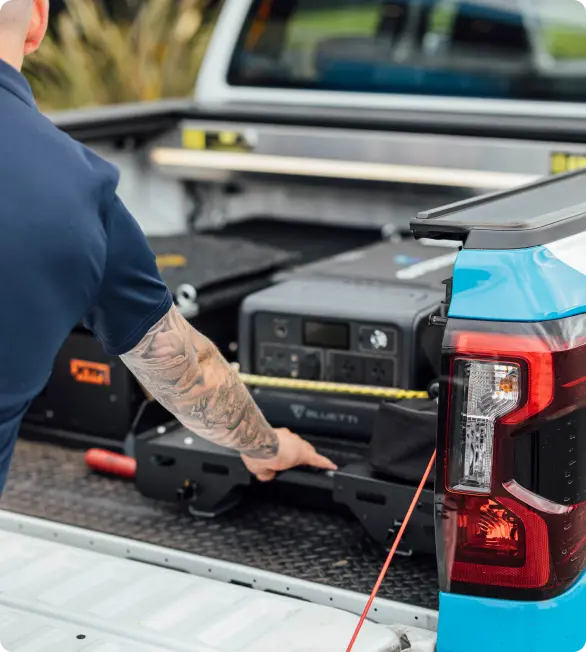
Confirm Leak Location With Confidence
If you need to confirm whether a leak is present and where action is justified, we can help. Our acoustic leak detection service is designed for live water networks and provides clear, field-validated results that support confident operational and NRW decisions.
Request a leak detection quote to scope your network, confirm suitability, and understand what outcomes to expect before any site work begins.
Frequently Asked Questions
Do you offer residential leak detection services?
No. Our acoustic leak detection services are designed specifically for utility-operated water networks. We work within live assets, DMAs, and pressure zones, and our processes are built to support operational and NRW decision-making rather than residential fault finding.
How accurate is acoustic leak detection on live water networks?
Accuracy depends on network conditions, which is why our focus is on confirmation rather than raw detection. We assess operating pressure, background noise, pipe material, and network layout, and validate findings in the field before results are reported. We use a range of leak detection technologies, such as listening sticks, ground microphones, leak noise correlators, internal leak detection devices, AI acoustic noise loggers and trunk main correlators.
This approach reduces false positives and ensures results are reliable enough to support real operational decisions.
What happens if no leak is found?
That outcome is documented and reported clearly, with details on the process followed and how we arrived at that conclusion.
Confirming that no actionable leak is present is still a valid result. It allows teams to rule out further investigation, avoid unnecessary excavation, and redirect resources with confidence rather than continuing to work on assumptions.
How do you confirm that a signal is a genuine leak?
Potential leak signals are validated on site, not reported as raw data. This includes assessing signal consistency across listening points and confirming whether the characteristics align with known leak behaviour under live network conditions.
Only findings that meet confirmation criteria are recommended for action.
Is acoustic leak detection suitable for all pipe materials and network types?
Acoustic leak detection is effective across many network types, but it does have limitations. Suitability depends on factors such as pipe material, depth, operating pressure, and background noise. Leak detection on metallic water mains is much more straightforward than leak detection on PVC, PE, HDPE or MDPE water pipes. With advances in technology, detecting leaks in these materials is still possible.
We assess suitability during scoping and are clear upfront if conditions may limit reliability, so expectations are set before any field work begins.