
Gas pocket detection in sewer rising mains matters because trapped gas can reduce capacity, create pressure instability, and increase corrosion risk before a failure shows up. For utility leaders, the practical question is which assets are most likely to be affected, how to detect the problem with minimal disruption, and what to do with the result.
A trapped gas pocket can alter pressure behaviour, reduce hydraulic efficiency, and contribute to localised H₂S corrosion. In an ageing or hard-to-access asset, this can quickly become a maintenance, reliability, and budget problem.
Detection helps utilities confirm whether trapped gas is likely to be affecting performance, corrosion risk or maintenance planning before the issue becomes more expensive to manage. With the right inspection approach, utilities can identify likely problem sections, confirm where gas has built up, and prioritise the next step based on asset risk.
Gas Pocket Detection in Sewer Rising Mains: What Utilities Need to Know
For a utility decision-maker, gas pocket detection in sewer rising mains is an asset risk issue before it is a purely technical issue. If gas is building up inside a rising main, the system may already be telling you that conditions are right for corrosion, reduced capacity, or unstable operation.
That does not mean every gas pocket is an emergency. It does mean the asset deserves closer attention, especially if it is ageing, hard to access, or already showing signs of poor performance.
Detection helps utilities move from assumption to evidence. Instead of waiting for a break, blockage, complaint or unexplained performance decline, you can screen the line, identify likely risk points, and decide whether the next step is inspection, monitoring or maintenance.
Where Gas Pockets Form and Why They Matter
Gas pockets in sewer rising mains usually form where flow conditions allow gas to separate and collect. High points are the obvious risks, but they are not the only ones.
Common locations include:
- High points in the pipe profile
- Low-flow or intermittent flow sections
- Wet wells and discharge points
- Sections with poor air-release performance
- Oversized or underused pipeline sections
- Older assets with internal roughness or corrosion
- Odour problem areas where gas generation is already active
These conditions matter because trapped gas changes how the line behaves. It can affect hydraulic performance, create pressure irregularities, and increase the chance of H₂S-driven corrosion in localised areas.
That is why gas pocket detection in sewer rising mains is so closely tied to corrosion risk. If you are already seeing odour, repeated maintenance, or unexplained performance changes, trapped gas should be on the list of likely causes.
Our H₂S corrosion guidance on sewer rising mains explains how trapped gas and corrosion risk often go hand in hand, especially in older assets and at problem profile points.
Why Utilities Should Care About Gas Pockets
A gas pocket is not just a technical nuisance. It can reduce capacity, create pressure instability, and make a rising main harder to predict and manage.
The bigger risk is what comes after that. Trapped gas can contribute to H₂S corrosion, which increases the chance of localised pipe damage, more frequent maintenance, and unplanned service disruption.
For utility decision-makers, that matters because it turns a hidden operating issue into a budget and reliability issue. A gas pocket can drive repeated pump trips, reduced flow capacity, unstable pressure readings, odour complaints, and accelerated H₂S corrosion that shortens the life of pipe, fittings, and valves. If the line is already ageing or difficult to access, those problems can lead to more shutdown time, more reactive repairs, and higher inspection costs.
What matters most is that the asset can look operational on the surface while still carrying a growing risk beneath it. A rising main may keep moving flow, but gas can still create transient behaviour, reduce pump efficiency, and make the system harder to model or trust during future planning.
There is also a decision-making risk. If you treat the issue as only a corrosion problem, you may miss the hydraulic cause. If you treat it as only a hydraulic issue, you may miss the conditions that are already damaging the pipe. That is why utilities usually get more value when they assess both sides together.
For asset managers and utility teams, the key questions are straightforward:
- Is this issue affecting current performance, or only creating future risk?
- Is the problem likely isolated, or does it suggest a broader asset or profile issue?
- Do we need inspection now, or is targeted monitoring enough to justify the next spend?
- Which failure mode is most likely first: capacity loss, pressure instability, odour, or corrosion?
A useful next step is to assess both the hydraulic and corrosion sides of the issue together, not separately.
How to Detect Gas Pockets in Sewer Rising Mains
There is no single method that suits every rising main. The right approach depends on access, criticality, the level of disruption you can tolerate, and what you need to learn.
1. Acoustic inspection
Acoustic methods can help identify anomalies in the line that may indicate trapped gas, leaks, or other defects. They are often attractive because they can be applied with limited disruption and without opening the pipe.
For decision-makers, the key question is whether the result is enough to justify action. Acoustic tools are useful for screening, but they do not always tell you everything you need to know about wall condition or long-term risk.
2. Transient analysis
Transient monitoring looks at pressure response and flow behaviour. It can reveal unusual conditions that suggest gas is present, especially when the line is behaving differently from what the hydraulic model would predict.
This approach is valuable when you want to understand the system rather than just find a defect. It helps separate a one-off operating issue from a recurring asset problem.
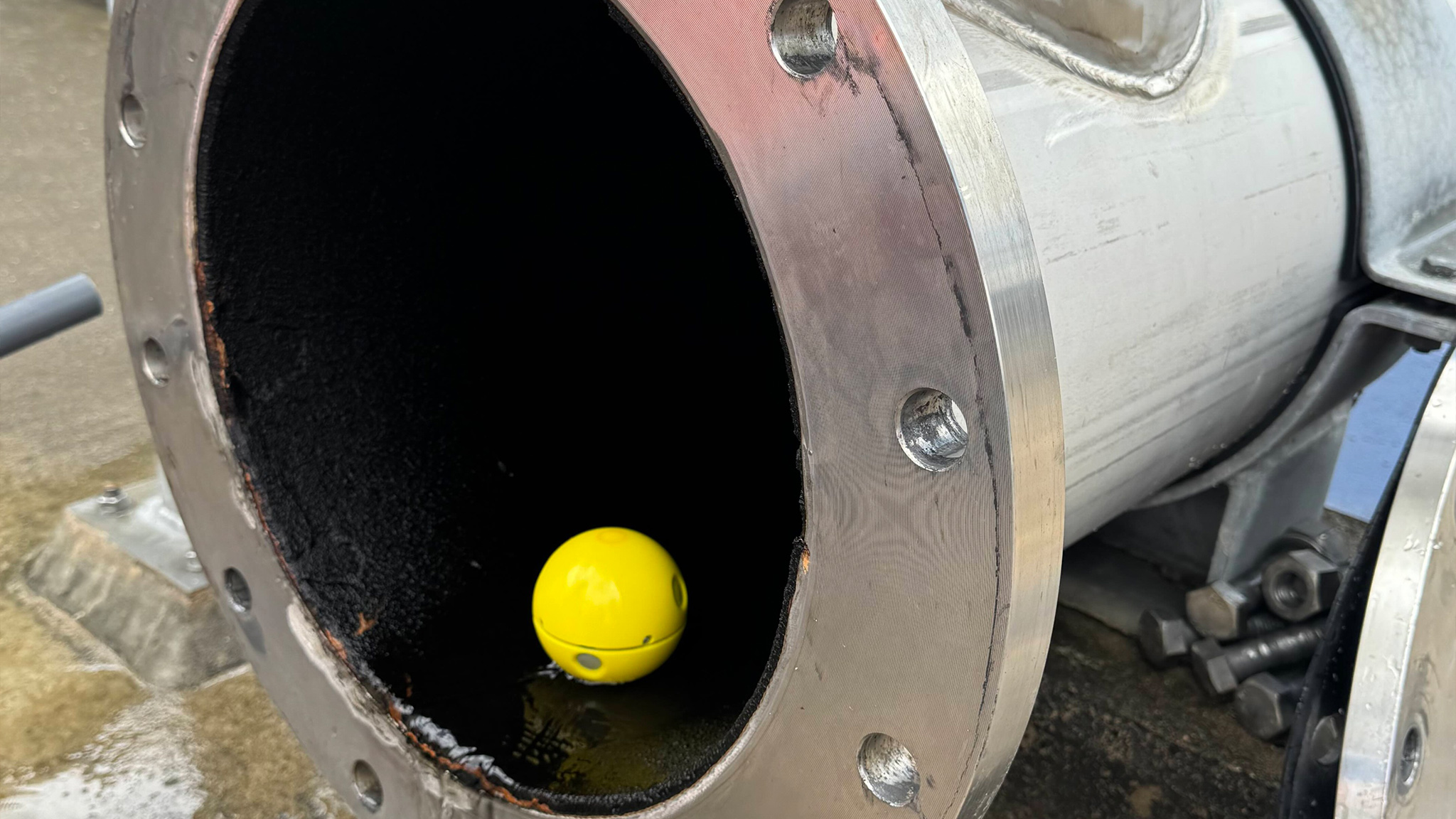
3. Free-swimming or inline inspection tools
Where access and operating conditions allow, inline or free-swimming tools can give a clearer picture of what is happening inside the pipe. That can be especially useful when acoustic inspection does not show a leak, but the network still has unexplained performance issues. In our proactive leak detection in a wastewater outfall pipeline case study, acoustic inspection found no leaks, but the investigation still identified several gas pockets along the line.
This shows why leak detection alone may not provide the full asset picture. A line can be structurally tight while still carrying gas pockets that affect hydraulic performance and corrosion risk.
4. Air valve and asset review
Sometimes the first clue is not a tool result. It is repeated air-release issues, nuisance odour, or a pattern of poor performance at the same locations. Reviewing the asset’s air valves, profile changes, and operating conditions can help pinpoint where a more focused inspection should go.
For many utilities, the best approach is staged. Start with a screening method, then move to a more detailed inspection if the risk profile justifies it.
How to Interpret Findings Before You Spend
Finding a gas pocket does not automatically mean the pipe is failing. It means the asset has conditions worth understanding more fully.
That distinction matters. A gas pocket is a warning sign, not a final diagnosis.
Before you commit to capital works or major intervention, ask three questions:
1. Is this a hydraulic issue, a corrosion issue, or both?
A pocket of trapped gas may reduce performance even if the pipe wall is still serviceable. It may also signal local conditions that are accelerating H₂S corrosion.
2. How widespread is the problem?
One isolated pocket at a profile point may need monitoring or a local fix. Multiple pockets across the line suggest a wider operating or design issue.
3. What is the next best action?
The answer may be further inspection, asset condition assessment, better air-release management, or a targeted maintenance program. In some cases, the right move is to monitor and verify whether the issue is stable or worsening.
This is where gas pocket detection in sewer rising mains becomes a decision-support tool. It helps you decide where to spend, where to defer, and where a deeper inspection is justified.
If the result suggests broader asset uncertainty, a pipeline condition assessment can help separate gas-related symptoms from structural deterioration.
Choosing the Right Detection Approach for Your Network
The best method is the one that matches your risk, access, and budget. A critical rising main with a history of issues needs a different approach from a lower-risk line with limited signs of trouble.
| Approach | Best for | Disruption | What it tells you | Typical decision use |
|---|---|---|---|---|
| Acoustic inspection | Screening and anomaly detection | Low | Possible defects or gas-related anomalies | First-pass investigation |
| Transient monitoring | Understanding pressure behaviour | Low to medium | Pressure changes and operating instability | Confirming recurring issues |
| Free-swimming or inline inspection | Detailed internal assessment | Low to medium | Internal conditions and gas pocket locations | Higher-confidence planning |
| Asset review and air-valve assessment | Finding likely problem zones | Low | Design and operating contributors | Prioritising inspection sites |
For utility leaders, the question is rarely which tool is best in theory. It is which tool gives you enough confidence to act without unnecessary disruption.
If you are managing a network with limited condition data, start by prioritising the highest-risk assets. That usually means older lines, critical discharge paths, and sections with known odour, pressure, or air-release problems.
A targeted inspection program can then focus on the lines most likely to benefit from gas pocket detection in sewer rising mains, rather than spreading budget too thin.
How Aqua Analytics Can Help
Gas pocket detection in sewer rising mains is most useful when it leads to a clear next step. The goal is not simply to confirm that gas is present. It is to understand whether the issue is affecting capacity, corrosion risk, pressure behaviour or maintenance planning.
Aqua Analytics helps utilities assess buried pipelines using inspection and monitoring methods that identify gas-related risk, pressure behaviour, leak indicators and broader asset condition concerns. This gives asset teams clearer evidence before committing budget to maintenance, further inspection or capital works.
If you are dealing with ageing rising mains, recurring odour issues, or a line that needs a clearer risk picture, pipeline condition assessment can be a practical first step.
Where the issue appears to be tied to pressure behaviour rather than visible damage, pressure transient monitoring can help you see how the line is responding and whether the problem is recurring.
If the asset is part of a broader wastewater or water-loss investigation, Aqua Analytics can also support active leak detection and more targeted inspection planning. The aim is to help you choose the next step with confidence, rather than making decisions from incomplete data.
If you are ready to reduce uncertainty, speak with our team today about a sewer rising main assessment or targeted pipeline condition review.