
Could H₂S Corrosion Be Hiding in Your Sewer Rising Main?
For Australian utilities, H₂S corrosion in sewer rising mains is more than just a pipe-material issue.
Long detention times, warm wastewater conditions, gas pockets, changing flow patterns and ageing infrastructure can all increase the risk of localised deterioration.
The challenge is knowing where that risk sits before it becomes a failure, an odour issue, an emergency repair, or a renewal priority.
Sewer rising mains are difficult assets to assess because they are buried, pressurised and often critical to network operation.
Corrosion may not occur evenly across the full length of the main.
In many cases, the highest-risk sections are linked to specific hydraulic conditions, such as high points, trapped gas, low-flow sections or areas where wastewater remains in the pipe for longer than expected.
Understanding how H₂S corrosion develops helps utilities make better decisions about inspection, maintenance and renewal.
With the right condition data, asset teams can identify high-risk sections earlier, prioritise work more confidently and reduce the need for reactive repairs.
What Is H₂S Corrosion in Sewer Rising Mains?
H₂S stands for hydrogen sulphide. It is a gas that can form in wastewater systems when organic matter breaks down in low-oxygen conditions.
In sewer rising mains, this risk often increases when wastewater stays in the pipe for longer periods, flow is low, or gas becomes trapped at high points.
Under these conditions, sulphides can build up in the wastewater and hydrogen sulphide gas can accumulate in certain sections of the main.
The corrosion process becomes more damaging when H₂S gas interacts with moisture and bacteria on pipe or structure surfaces.
This can contribute to sulphuric acid formation, which can then attack vulnerable materials such as concrete, cement mortar linings, ferrous metals and other exposed surfaces.
The key issue for utilities is that H₂S corrosion is rarely uniform. It may be concentrated around specific hydraulic or operational conditions, such as:
- high points where gas pockets can form
- discharge points where turbulence releases H₂S gas
- areas with poor air release or ventilation
- sections with long detention times
- locations where wastewater conditions support sulphide generation
This is why two sections of the same rising main can have very different risk profiles.
One section may remain in acceptable condition, while another may experience localised wall loss, odour issues or accelerated deterioration.
Why Sewer Rising Mains Are Vulnerable to H₂S Corrosion
Sewer rising mains can create the conditions that allow hydrogen sulphide to form, collect and become corrosive.
The risk is usually higher when wastewater remains in the pipe for longer periods, oxygen levels are low, and flow conditions allow gas or solids to accumulate.
In many Australian networks, rising mains also operate across long distances, variable demand areas and warmer conditions.
These factors can increase wastewater retention time and make it harder to identify corrosion risk without a targeted assessment.
Long Retention Times
Long detention time is one of the main contributors to sulphide generation.
When wastewater sits in a rising main for an extended period, oxygen is consumed and anaerobic conditions can develop.
Once these low-oxygen conditions are present, sulphides can form in the wastewater.
If H₂S gas is later released and comes into contact with moist pipe surfaces, the risk of acid-related corrosion increases.
Low Flow or Intermittent Pumping
Low-flow conditions can also increase risk. If the main is oversized, underused or only operates intermittently, wastewater may move too slowly through the pipe.
This can allow solids to settle, create stagnant zones and increase sulphide build-up.
Pump starts and stops can then disturb these conditions, moving gas and wastewater through the system in ways that may concentrate corrosion risk at certain points.
High Points and Gas Pockets
High points in a sewer rising main can trap air or gas.
These gas pockets can reduce hydraulic efficiency, affect pressure behaviour and create localised areas where H₂S-related corrosion may be more likely.
This is why gas pocket detection is important.
A rising main may appear to be operating normally, while specific high points or poorly ventilated sections are exposed to much higher corrosion risk than the rest of the asset.
Where Is H₂S Corrosion Risk Highest?
H₂S corrosion risk is not always highest in the oldest section of the rising main.
It is often highest where hydraulic conditions allow gas to collect, wastewater to stagnate or H₂S to be released onto moist surfaces.
For utilities, this means the critical risk areas may be specific sections of the main rather than the full asset.
Common high-risk locations include:
- High points in the rising main, where gas pockets can form and remain trapped
- Sections with poor air release, where gas is not being removed effectively
- Downstream discharge points, where turbulence can release H₂S from the wastewater
- Receiving manholes and wet wells, where exposed surfaces may be affected by corrosive gases
- Low-flow or oversized sections, where wastewater may remain in the pipe for longer than expected
- Areas with repeated odour or air valve issues, which may indicate gas accumulation
- Older or vulnerable pipe materials, especially where protective linings have deteriorated
The highest-risk section is not always obvious from age, material or asset records alone.
A newer section with poor hydraulic conditions may face greater localised risk than an older section with better flow and ventilation.
This is why targeted assessment matters.
By identifying where gas pockets, pressure changes or corrosion-prone conditions are likely to occur, utilities can focus investigation and maintenance on the parts of the network that need attention first.
Common Warning Signs of H₂S Corrosion Risk
H₂S corrosion can be difficult to confirm without inspection or testing, but certain network symptoms can indicate that a sewer rising main needs closer assessment.
Common warning signs include:
- Persistent odour complaints, especially near pump stations, discharge points or receiving manholes
- Repeated air valve issues, including blockages, corrosion, leaks or maintenance callouts
- Known high points, particularly where trapped gas has been suspected or confirmed
- Visible corrosion around discharge structures, wet wells, access chambers or associated fittings
- Unexplained pipe wall loss, localised defects or previous repairs in specific sections
- Increased maintenance frequency across the same part of the network
- Historic bursts, leaks or failures in rising mains with similar operating conditions
- Inconsistent pressure behaviour, especially during pump starts and stops
- Evidence of gas accumulation, including surging, air release issues or reduced hydraulic performance
These signs do not automatically confirm H₂S corrosion.
Odour, pressure changes and air valve issues can have several causes.
They are useful triggers for further investigation because they point to conditions where corrosion, gas accumulation or operational stress may be developing.
For Australian utilities managing critical or hard-to-access rising mains, early assessment can help separate minor operational issues from genuine asset risk.
This makes it easier to prioritise monitoring, maintenance or condition testing before the problem becomes more expensive to manage.ns include:
How Utilities Can Assess H₂S Corrosion Risk in Sewer Rising Mains
Assessing H₂S corrosion risk starts with understanding the conditions inside and around the rising main.
The goal is not just to confirm whether corrosion exists.
It is to identify where the risk is highest, what may be driving it and which sections need further investigation.
A targeted pipeline condition assessment can help utilities move from broad assumptions to practical condition data.
Review Operating Conditions and Asset History
A good first step is to review how the main behaves and what is already known about the asset. This may include:
- pump run times and cycling patterns
- flow velocity and detention time
- pipe age, material and lining type
- previous bursts, leaks or repairs
- odour complaints or air valve maintenance records
- known high points and vertical alignment changes
- discharge locations and receiving structures
- the main’s criticality within the broader sewer network
This helps narrow the focus before field assessment begins.
Identify Gas Pocket Risk Areas
Gas pockets can play a major role in localised corrosion risk.
They often form at high points, changes in vertical alignment or sections where air release is not working effectively.
Identifying these areas helps utilities understand where H₂S may accumulate and where corrosion risk may be greater than asset records suggest.
This is especially useful for long sewer rising mains, where full-length investigation may be costly or disruptive.
Use Advanced Inline Inspection Technologies
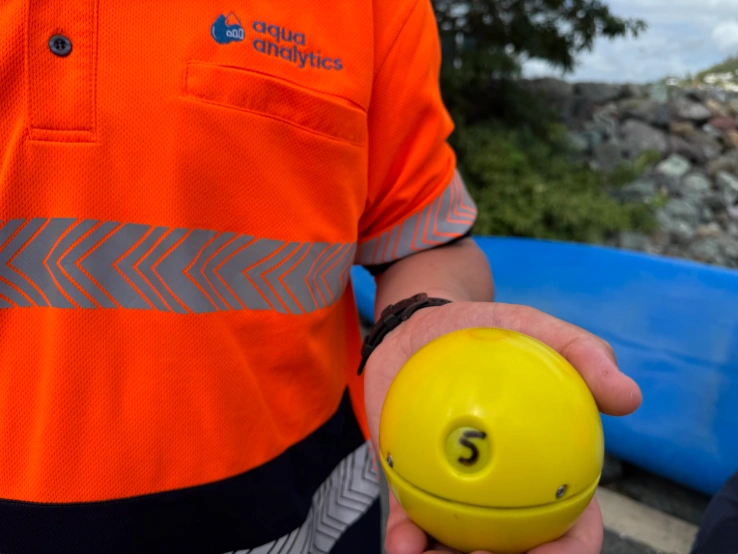
To accurately determine the structural integrity of a sewer rising main, asset owners are increasingly turning to advanced inline inspection technologies, such as “smart pigs.” Unlike traditional inspection methods, these tools travel through the pipe to provide granular, internal data that helps identify localised wall loss and internal defects.
Leveraging specialised technology from experts like Acquaint, these processes involve a rigorous, graduated approach to ensure reliability and safety:
- Cleaning Pigs: Before high-resolution inspection occurs, cleaning pigs are deployed to clear debris and prepare the pipe interior. This step is essential for high-quality data collection.
- Graduated Pigging Approach: A proven three-step progressive approach, starting with flexible, 100% soft foam pigs, is used to clean the pipe wall and navigate even the smallest openings, significantly reducing the risk of the inspection tool becoming stuck.
- Smart Pigging for Condition Assessment: Once the pipe is cleaned, smart pigs are deployed to identify critical defects. These advanced tools can pinpoint:
- Localised Wall Loss: Detecting internal and external corrosion before failure.
- Pipe Geometry Changes: Identifying deformations or structural anomalies.
- Internal Defects: Mapping the precise location and extent of H₂S-related deterioration.
By using a methodical, multi-stage inspection process, utilities can confidently map the condition of their assets, moving from reactive repairs to proactive, evidence-based renewal planning. This targeted approach ensures that investigation efforts are focused where risk is highest, ultimately extending the operational life of critical sewer rising mains.
Use Pressure and Flow Data
Pressure and flow data can show how the rising main performs during normal operation, pump starts, pump stops and changing demand conditions.
In some networks, pressure transient monitoring can also help identify pressure events that may be contributing to asset stress.
This data can help identify unusual pressure behaviour, hydraulic restrictions, air-related issues or transient events that may be contributing to asset stress.
It can also support better decisions about where physical inspection or targeted condition testing should occur.
Use Targeted Condition Assessment
Once high-risk sections are identified, utilities can use targeted condition assessment to better understand asset condition.
Depending on the main and the project objectives, this may include in-line screening, non-invasive assessment, ultrasonic wall thickness testing or targeted excavation where the data supports it.
The key is to avoid treating the full rising main as a single uniform risk.
A targeted approach helps utilities compare conditions across different sections, prioritise further investigation and make clearer decisions about maintenance, monitoring or renewal.
What Happens If H₂S Corrosion Is Left Unmanaged?
If H₂S corrosion is left unmanaged, localised deterioration can continue until the asset has less structural capacity than expected.
This can increase the risk of leaks, bursts, odour issues and emergency repairs.
The main concern is that corrosion may progress in specific sections without obvious surface symptoms.
By the time a defect is visible, the affected area may already require urgent intervention.
For utilities, unmanaged H₂S corrosion can lead to:
- Localised wall loss, reducing the pipe’s ability to handle normal operating pressure
- Higher leak or burst risk, especially in already stressed or ageing sections
- More frequent maintenance, including repeated air valve, pump station or discharge point issues
- Odour and safety concerns, particularly around pump stations, wet wells and receiving structures
- Environmental risk, including potential sewage spills if the main fails
- Emergency repair costs, which are often higher than planned investigation or renewal works
- Poor capital planning, where renewals are triggered by failures rather than condition evidence
The broader issue is confidence.
Without condition data, asset teams may not know whether a rising main needs immediate work, targeted monitoring or long-term renewal planning.
A proactive assessment approach helps reduce that uncertainty.
It gives utilities a clearer view of where risk is building and what action is justified before failure becomes the decision-maker.
How Proactive Assessment Supports Better Asset Decisions
For Australian utilities, the value of assessment is not just finding corrosion.
It is knowing which sections need action now, which sections can be monitored and where capital works can be planned with greater confidence.
A proactive approach helps asset teams move from assumption-based planning to evidence-based decision-making.
Instead of replacing a rising main because it is old, or delaying work because there has not been a recent failure, utilities can use condition data to understand the actual risk profile of the asset.
This can support better decisions across:
- Maintenance planning, by identifying sections where air release, venting or operational changes may reduce risk
- Renewal prioritisation, by showing which parts of the main are most likely to need capital works
- Budget allocation, by helping teams focus spend where it will reduce the highest risk
- Emergency works reduction, by identifying localised issues before they become failures
- Long-term asset management, by building a clearer evidence base for future planning
This is especially important for critical sewer rising mains where failure could affect service reliability, environmental performance and community confidence.
By supporting data-backed pipeline renewal planning, proactive assessment helps utilities decide whether to monitor, maintain, rehabilitate or renew a rising main.
By combining operational data, gas pocket detection and targeted condition assessment, utilities can make more practical decisions about whether to monitor, maintain, rehabilitate or renew a rising main.
That creates a stronger basis for managing H₂S corrosion risk without over-investigating low-risk sections or overlooking high-risk ones.
Need to Assess H₂S Corrosion Risk in a Sewer Rising Main?
If you are managing sewer rising mains across a council or utility network, Aqua Analytics can help identify gas pocket risk, assess asset condition and support evidence-based renewal planning.
Our team works with utilities across Australia and New Zealand to assess critical water and wastewater assets, identify high-risk sections and provide practical data for network decisions.
Whether you are dealing with odour issues, known high points, repeated air valve problems, unexplained deterioration or limited condition data, targeted assessment can help you understand what is happening inside the main before committing to major works.
Get in touch with our team today to discuss your sewer rising main assessment needs.